The label is not trying to trick you… it’s just a little dense before coffee.
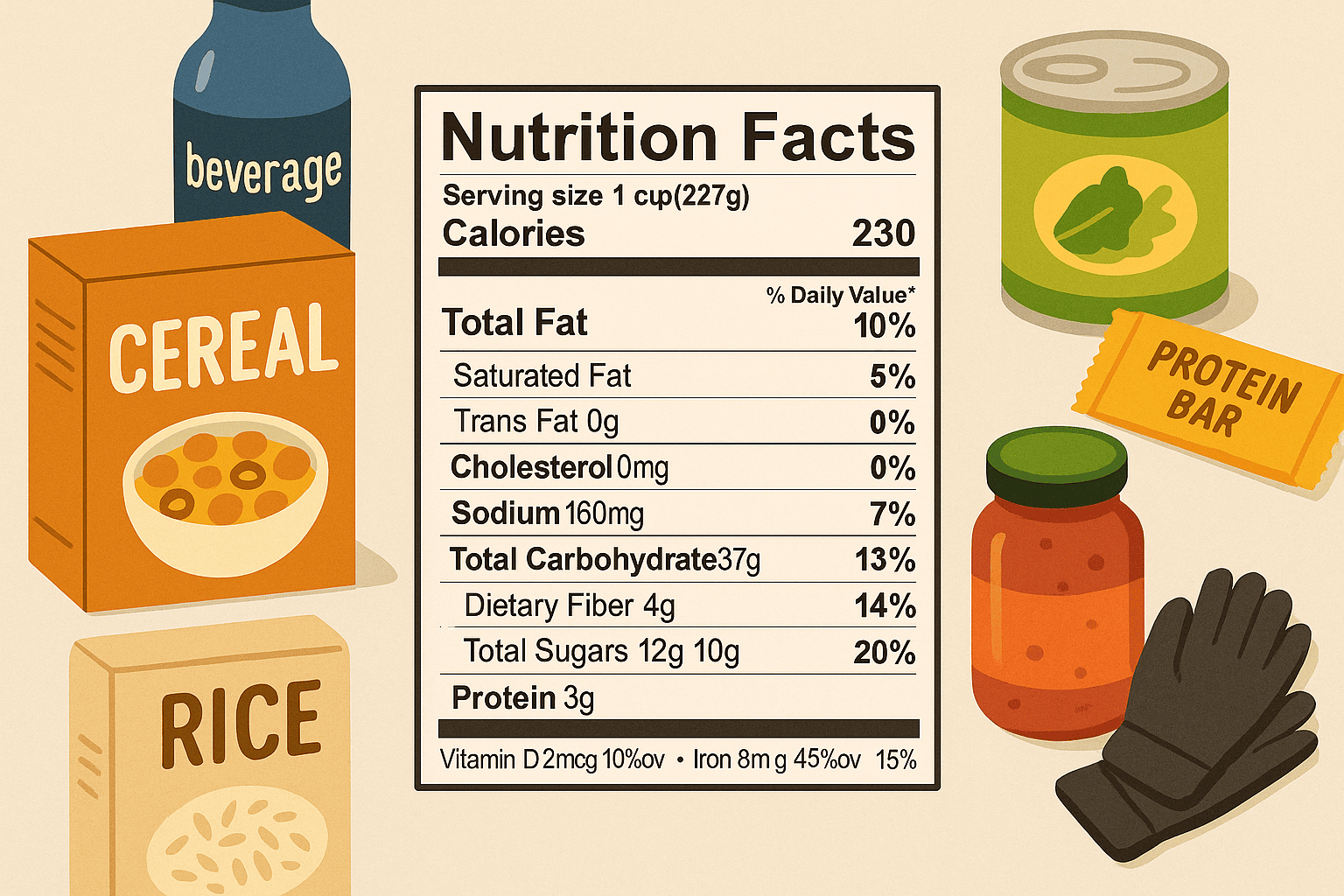
Whether you’re aiming to build muscle, lose fat, or simply stop playing “mystery macros,” learning to decode a Nutrition labels will save you time, calories, and buyer’s remorse. Below is a step-by-step system you can use in any grocery aisle—fast.
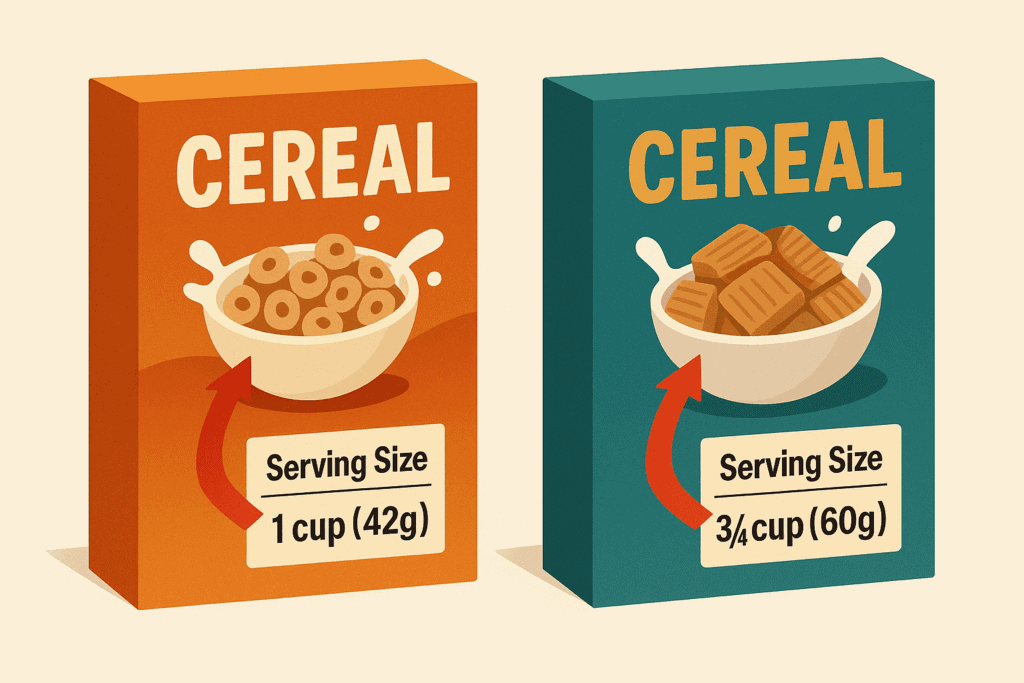
Start with Serving Size
Before looking at calories or protein, check the serving size. Labels are standardized so similar products use realistic, comparable serving sizes—so you’re not comparing ⅓ cup to 1 cup without realizing it. This lets you compare brands apples-to-apples (or, uh, cereal-to-cereal). Government of Canada
✨ If you eat double the serving, you eat double the numbers—yes, including sodium, sugars, and calories.
Scan % Daily Value (%DV) for “little vs a lot”
The %DV tells you how much a nutrient contributes to a typical day. A super simple rule from Canadian labelling:
- 5% DV or less = a little
- 15% DV or more = a lot
Use this to target nutrients to limit (e.g., saturated fat, sodium, sugars) and nutrients to get more of (e.g., fibre, calcium, iron, potassium). Skim first, decide second.
✨The %DV is your speed-read—no calculator required.
Calories are context—not a verdict
Calories matter for goals, but what those calories are made of matters too. Compare two items with similar calories and check:
- Protein (recovery and satiety)
- Fibre (fullness, gut health)
- Sodium/saturated fat (keep reasonable)
If the label looks “meh,” flip to the ingredients to see why.
Ingredient List = the product’s “recipe”
Ingredients are listed in descending order by weight. If the first ingredients are sugar, refined flour, or oils, that tells you a lot about the food’s priorities (and yours). Components (ingredients-of-ingredients) are shown in parentheses right after the ingredient name.
Sugars cheat code (Canada-specific): sugar-based ingredients are grouped in brackets after the word “Sugars” and listed from most to least by weight—making it easier to spot how much sweet stuff is in there compared to everything else.
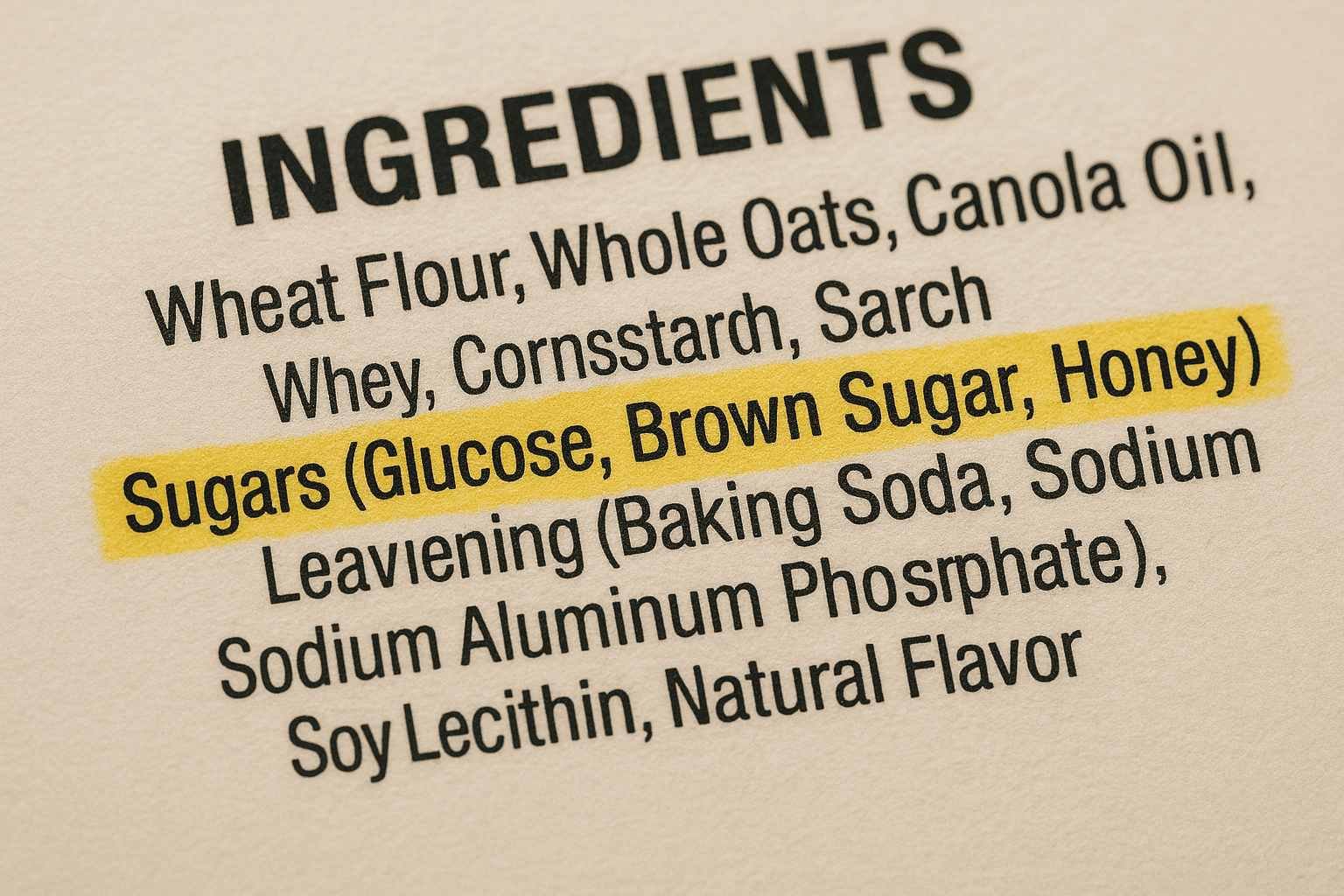
First few ingredients tell the story. If whole foods lead the list, you’re usually in better territory.
Sugars: total, %DV, and reality checks
On the Nutrition Facts table, you’ll see total sugars (with a %DV in Canada). Combine that with the ingredient list to gauge both amount and source. A yogurt with fruit purée differs from one with Sugars (glucose-fructose, cane sugar) leading the parade. Use the 5% / 15% guide to quickly judge whether the sugars are “a little” or “a lot.”
Context matters: higher-sugar foods can still fit your plan—especially around workouts—if the rest of your day balances out.
Watch for the new front-of-package symbol (fast red-flag check)
Many products now show a black-and-white magnifying glass symbol on the front when they’re high in saturated fat, sugars, and/or sodium. It’s designed to give you a quick heads-up before you even flip the box. Use it as a quick filter, then confirm details in the Nutrition Facts.

How to compare two products in 30 seconds
- Serving size: same or similar? (If not, adjust.)
- Protein & fibre: which one gives more per serving?
- %DV red flags: saturated fat, sodium, sugars—closer to 5% or 15%?
- Ingredients: whole-food firsts vs. ultra-processed add-ons; check Sugars (…) group.
- Goal fit: bulking, cutting, or fueling activity? Pick the one that aligns.
✨Don’t hunt for “perfect.” Hunt for better—consistently.
Special cases: when details matter more
- Sodium-sensitive? Prioritize items with <5% DV sodium; watch soups, sauces, deli meats.
- Managing blood sugar? Fibre-rich carbs and balanced meals beat “sugar-free” marketing.
- Muscle gain? Choose items with higher protein per serving and moderate sugars around training.
(And if you see claims like “net carbs,” be skeptical; stick to total carbs, fibre, and ingredient quality.)
Put it into practice (with real-life swaps)
- Granola A: 250 kcal, 10g sugar (20% DV), first ingredients Sugars (…) and oil → tasty but dessert-ish.
- Granola B: 220 kcal, 5g sugar (10% DV), first ingredients rolled oats, nuts, seeds → more everyday-friendly.
Choose B for daily breakfast; save A for a topping or treat.
Additional resources
- Pair smart label reading with planning: Meal Prep for Fitness: Save Time, Stay on Track
- Nail the basics behind the numbers: Beginner’s Guide to Macros: What You Need to Know
- Health Canada — Nutrition Facts Table (serving size, %DV, how to use it).
- Health Canada — Sugars on Food Labels (grouped sugars, how to spot them).
- CFIA — Ingredients & Allergens (descending order, components in parentheses).
- Front-of-Package Symbol, Health Canada (high in sat fat/sugars/sodium).
📌 FAQ: Sleep & Fitness
Q: Is 5% DV always “good” and 15% DV always “bad”?
A: It’s a guide, not a moral score. Aim low for nutrients to limit (sodium, sat fat, sugars) and high for nutrients to get more of (fibre, certain minerals).
Q: What if two brands have similar calories?
A: Check protein, fibre, sodium, sugars, and ingredients. That’s where quality hides.
Q: Do I need to memorize anything?
A: Just this: serving size first, %DV rule (5/15), ingredients tell the truth.
Final take
Reading labels like a pro isn’t about perfection—it’s about fast, repeatable decisions that match your goals. Once you master serving size → %DV → ingredients, the grocery aisle gets a lot less confusing (and your cart gets a lot more aligned with where you’re headed).
✨ Small, smarter choices—over and over—beat single “perfect” picks every time.